
2026-09-10
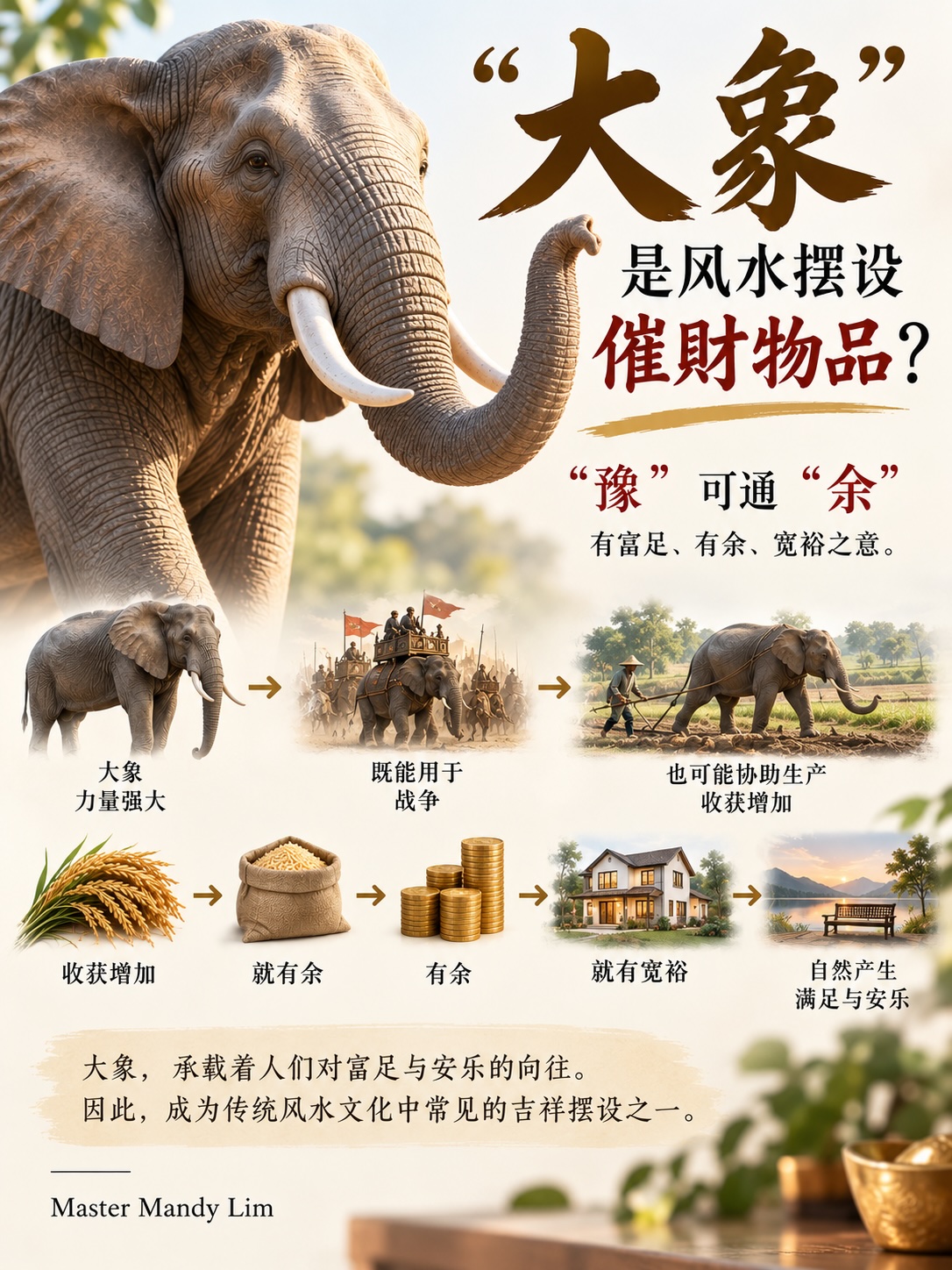
Legend has it that when King Zhou of Shang began using ivory chopsticks, his uncle Ji Zi was very worried. Ji Zi's concern wasn't just about the chopsticks themselves, but about how a person's pursuit of luxury could lead to ever-growing desires and ultimately a loss of proper respect and restraint. The *Lüshi Chunqiu* (Master Lü's Spring and Autumn Annals), in its chapter on ancient music, also records that the Shang people tamed elephants and used them in warfare. Besides, elephants were also used to aid in production. Whether in war or production, elephants could be helpful, amplifying human power and leading to greater gains. With increased harvests and more abundant resources, people naturally feel satisfied, and the character "豫" (Yu) gradually came to mean harmony and happiness. "豫" can also be related to "余" (Yu). The silk manuscript of "余" helps us understand "豫" from another perspective: surplus, abundance, a state of wealth and affluence. Therefore: Elephant → Utilizing the power of elephants → Increased harvest → Surplus, affluence → Satisfaction, happiness → 豫 (Yu). However, the *Yu* hexagram doesn't stop there with "happiness" and "happiness." While the character "豫" (yù) signifies joy and peace, it doesn't encourage indulging in pleasure alone. Rather, it emphasizes acting in accordance with the times. The core principle is: "Acting in accordance with the times."
2026-09-09
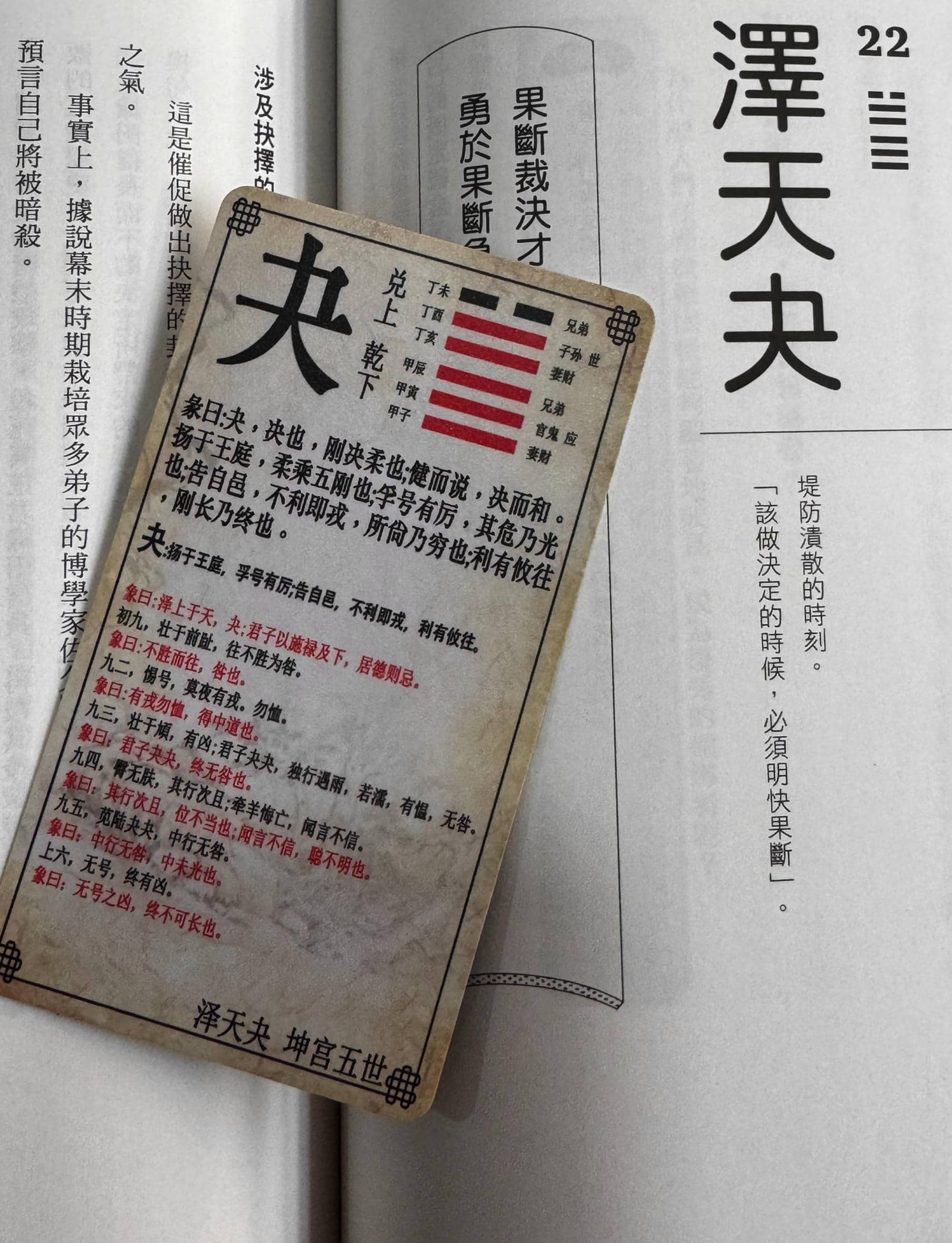
The hexagram Guai (夬) reminds us that it's not always others deliberately making things difficult for you; sometimes it's your own sharpness and bluntness that unknowingly increase obstacles. ✅ Be cautious in speech: Watch your words to avoid causing trouble. ✅ Conceal your sharpness: Don't flaunt your abilities everywhere; excessive rigidity easily attracts resistance. ✅ Be decisive and don't procrastinate: Make decisions when necessary and handle matters promptly.
2026-07-03
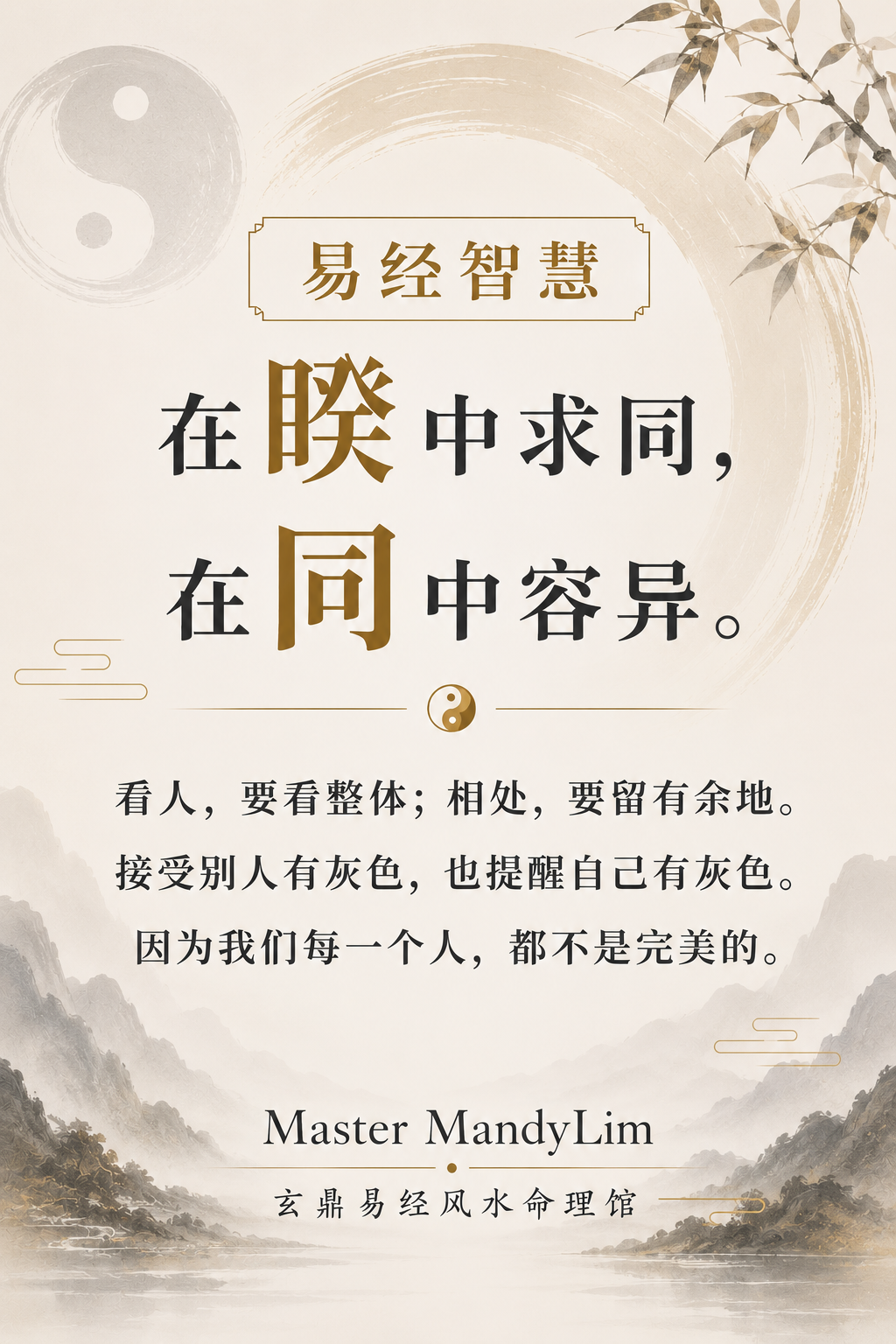
The Kui hexagram in the *I Ching* speaks of differences and disagreements between people. Many conflicts don't arise because the other person has become worse, but rather because when we discover our differences and flaws, we begin to oppose each other, even completely rejecting the other. However, the Kui hexagram truly teaches us not to reject differences, but to accept "harmony in diversity." People are inherently different, and differences don't signify right or wrong. On the other hand, the Tongren hexagram discusses how to build relationships. True "harmony" doesn't mean demanding others be exactly like us, nor does it mean idealizing them. It means acknowledging shared values while also embracing differences. Yin contains Yang, and Yang contains Yin; those with strengths also have weaknesses; those who have made mistakes may still possess a kind side. Truly mature people don't negate someone entirely because of their flaws, nor do they blindly worship someone because of their strengths. ✅When judging people, look at the whole picture; ✅Leave room for maneuver in relationships. ✅Accept that others have flaws, ✅And remind yourself that you also have flaws. Because none of us are perfect.
2026-05-12
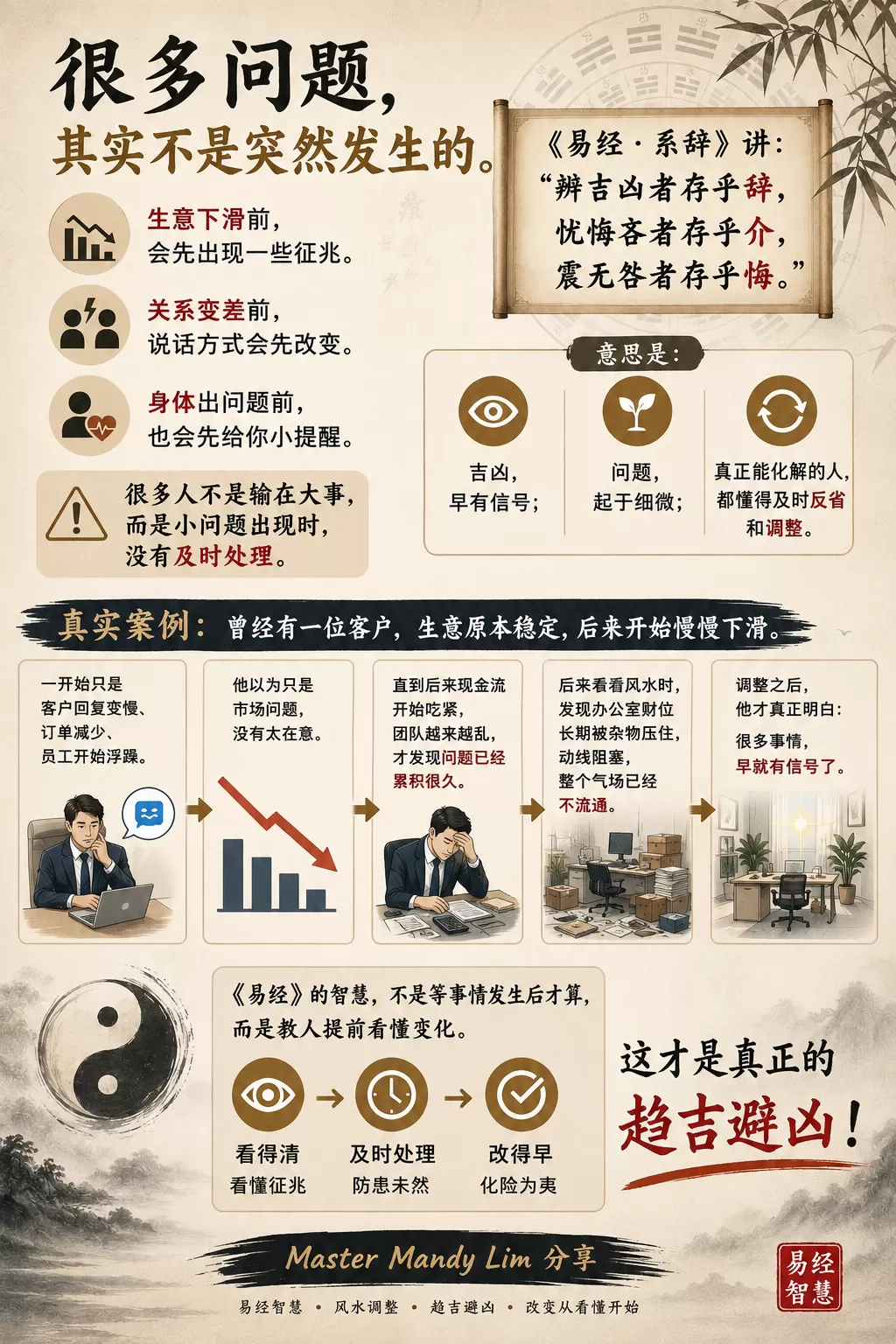
The Book of Changes (I Ching) states: "Those who discern good fortune and misfortune rely on the words themselves; those who grieve, regret, and sting rely on the intervening principles; those who experience thunder without blame rely on their remorse." This means: ✨Good fortune and misfortune are foreshadowed; ✨Problems arise from small things; ✨Those who can truly resolve them understand the importance of timely reflection and adjustment.
2026-03-05

The hexagram Jian (蹇) signifies being trapped between treacherous waters and towering mountains, with no way out. It is listed alongside Kan (坎), Tun (屯), and Kun (困) as one of the four most difficult hexagrams in the I Ching—the one with the most inescapable fate. Jian implies a limp, difficulty in movement—slow to walk and sometimes unsure of which way to go. Interestingly, in the six lines of Jian, the fifth line is in its proper position, while the first line is out of place. This shows that the difficulty of Jian stems from a wrong initial step. One wrong step leads to further difficulties. Every step is taken with utmost effort, but because the direction was wrong from the start, the harder one tries, the deeper one sinks into the predicament. Every step is taken with the best of one's ability, but there is simply no way out.
2026-02-27

Those in management positions, especially those who have risen through the ranks, sometimes doubt their own abilities. There's no need for excessive anxiety. The 19th hexagram of the I Ching—the Lin hexagram (#)—explains the principles of management. "Lin" means not only leading others, but also approaching, observing, and taking responsibility. Through the six lines, it's easy to see that management is a process of growth.
2026-02-24

The I Ching's Wu Wang hexagram tells us that the best state is "acting without seeking anything in return." When you focus solely on your efforts without worrying about the fruit that may not yet arrive, you gain a sense of inner peace and strength. Whether the Wu Wang hexagram brings good fortune or misfortune depends entirely on your thoughts. Taking things one step at a time may be slower, but it is the most stable path.
2026-02-24

The Mingyi hexagram teaches us: - First, conceal your strength; - Preserve yourself; - Wait for a more suitable opportunity. When circumstances are unfavorable, humility is a form of wisdom; longevity is more important than temporary victory.
2026-02-10

Being shrewd and capable is never the problem; the problem lies in showing off one's talents without realizing it. Not knowing how to conceal one's abilities easily attracts the envy of others, and over time, one will feel that everyone around them is a villain.
2025-11-26
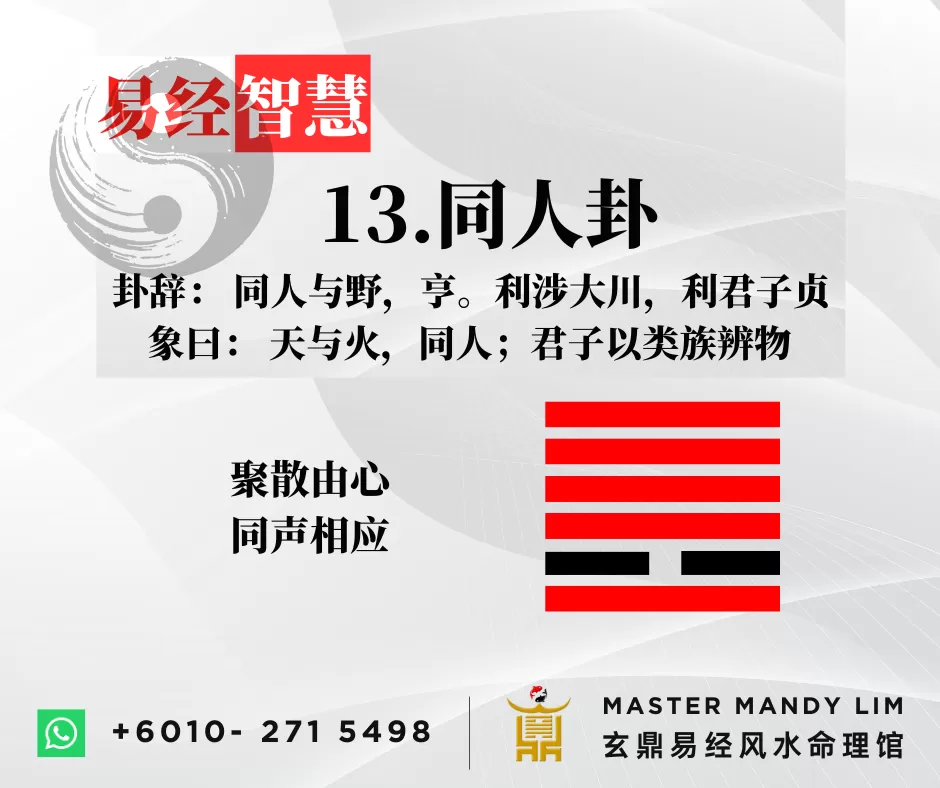
The term "doujin" (同人) in contemporary Japanese popular culture can also refer to non-commercial artistic groups. Whether they are obsessed with anime, cosplay, or niche electronic music, they come together because of pure passion and call their published works "doujinshi" (同人志). This kind of "doujin" born from interest, though unrelated to profit, possesses the most primal and fervent joy. However, upon closer examination, it's not hard to find that the lines 93 and 94 in the hexagram reflect the inevitable situation that arises after people get to know each other deeply: suspicion and defensiveness arising from conflicting opinions or interests in interpersonal relationships.
2025-09-11

If a company's boss is unwilling to communicate and only acts according to his own ideas; employees also act independently and do what they want, lacking mutual understanding and cooperation; the final result is often chaos, internal friction, and even collapse - this is the "Fei Gua" in the "Book of Changes", where there is no communication between the upper and lower levels, and the energy is blocked, making it difficult to move forward.
2025-09-11
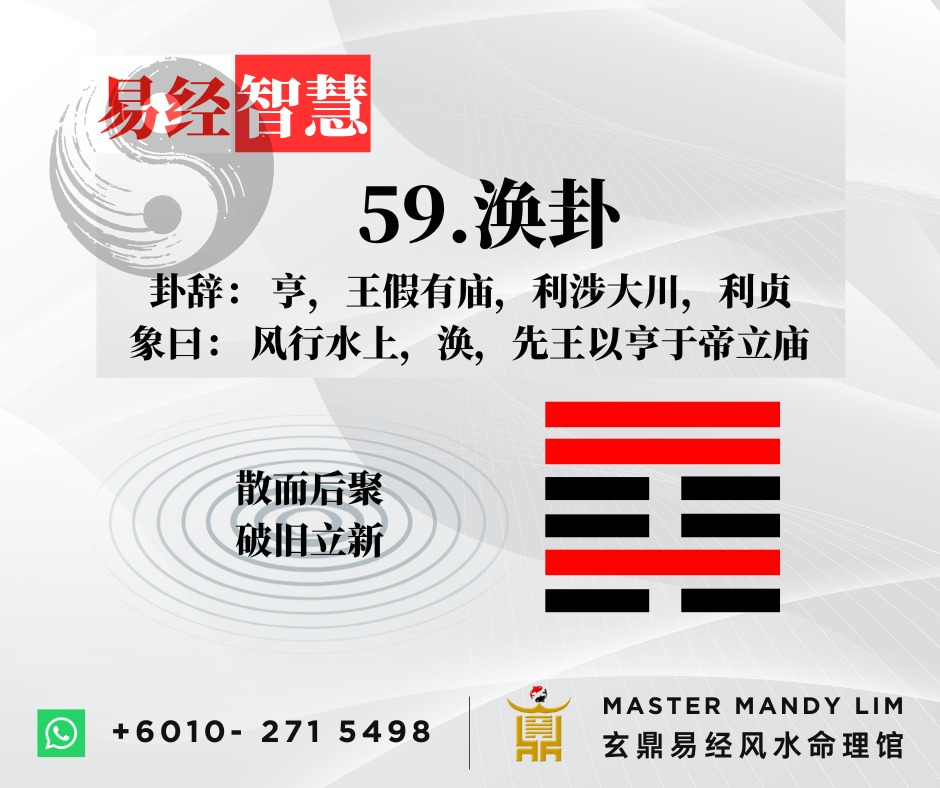
When many people hear the word "scatter," they subconsciously associate it with failure, disintegration, and disintegration. However, the "Huan" hexagram in the Book of Changes reminds us that "scatter" is not an end, but a new beginning. "Dispersion is not an end, but an opportunity for renewal; only after scattering and then gathering can there be new life."

 English
  Chinese