

2026-07-03
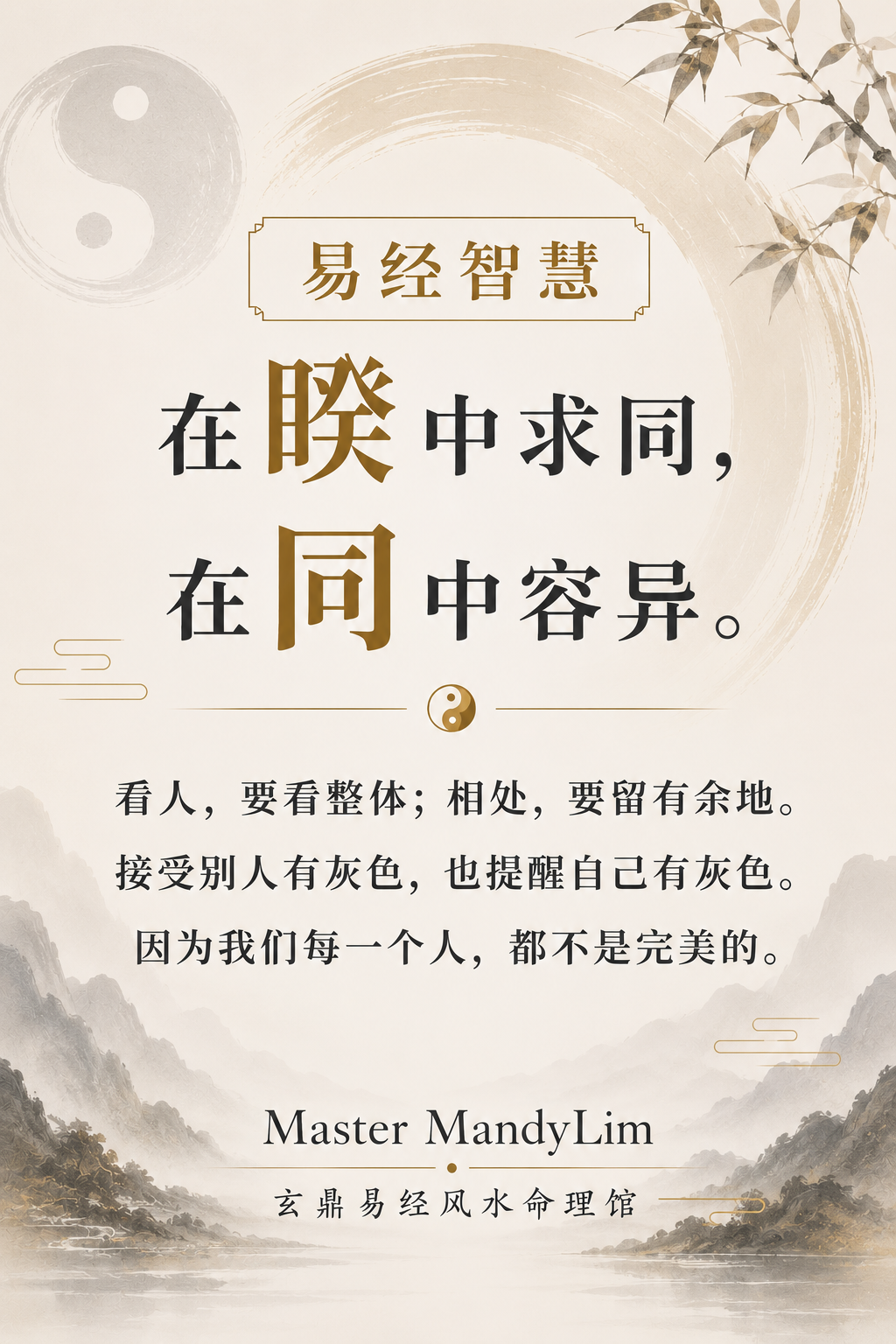
The Kui hexagram in the *I Ching* speaks of differences and disagreements between people. Many conflicts don't arise because the other person has become worse, but rather because when we discover our differences and flaws, we begin to oppose each other, even completely rejecting the other. However, the Kui hexagram truly teaches us not to reject differences, but to accept "harmony in diversity." People are inherently different, and differences don't signify right or wrong. On the other hand, the Tongren hexagram discusses how to build relationships. True "harmony" doesn't mean demanding others be exactly like us, nor does it mean idealizing them. It means acknowledging shared values while also embracing differences. Yin contains Yang, and Yang contains Yin; those with strengths also have weaknesses; those who have made mistakes may still possess a kind side. Truly mature people don't negate someone entirely because of their flaws, nor do they blindly worship someone because of their strengths. ✅When judging people, look at the whole picture; ✅Leave room for maneuver in relationships. ✅Accept that others have flaws, ✅And remind yourself that you also have flaws. Because none of us are perfect.
2025-11-26
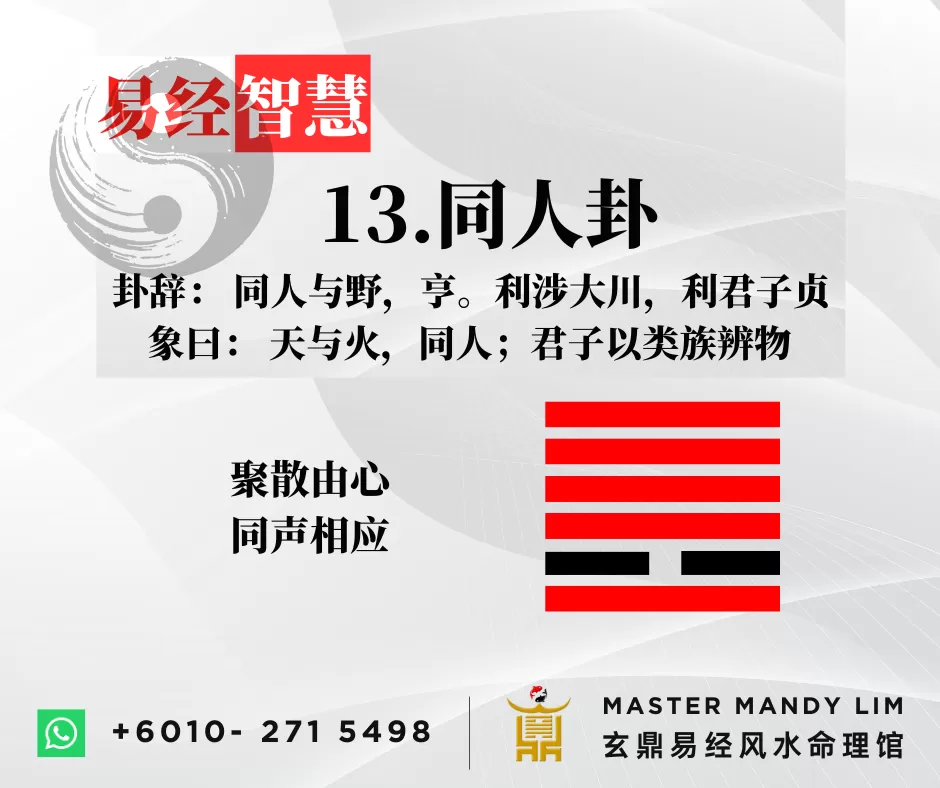
The term "doujin" (同人) in contemporary Japanese popular culture can also refer to non-commercial artistic groups. Whether they are obsessed with anime, cosplay, or niche electronic music, they come together because of pure passion and call their published works "doujinshi" (同人志). This kind of "doujin" born from interest, though unrelated to profit, possesses the most primal and fervent joy. However, upon closer examination, it's not hard to find that the lines 93 and 94 in the hexagram reflect the inevitable situation that arises after people get to know each other deeply: suspicion and defensiveness arising from conflicting opinions or interests in interpersonal relationships.

 English
  Chinese